
How Long Should Your Resume Be?
Every day, recruiters scan LinkedIn and their resume databases looking for candidates with the right skills and recent experience. Listing your skills in a summary at the top is good, but including them in your work history is essential. That’s where recruiters see how long and how deeply you’ve applied those skills.
Missing just one keyword can make your resume get passed over. Gaps in your work history can make your experience seem limited. That’s why content matters far more than length. A short resume can actually hurt your chances.
Recruiters want to identify the most valuable candidates quickly. If you know how to clearly show your full value, your resume becomes a tool that carries you through the entire hiring process.
A concise, value-packed resume, as oppsed to a short one, gives you a real edge in the marketplace. It’s a concept so often overlooked that even top recruiters and professional resume writers can miss it.
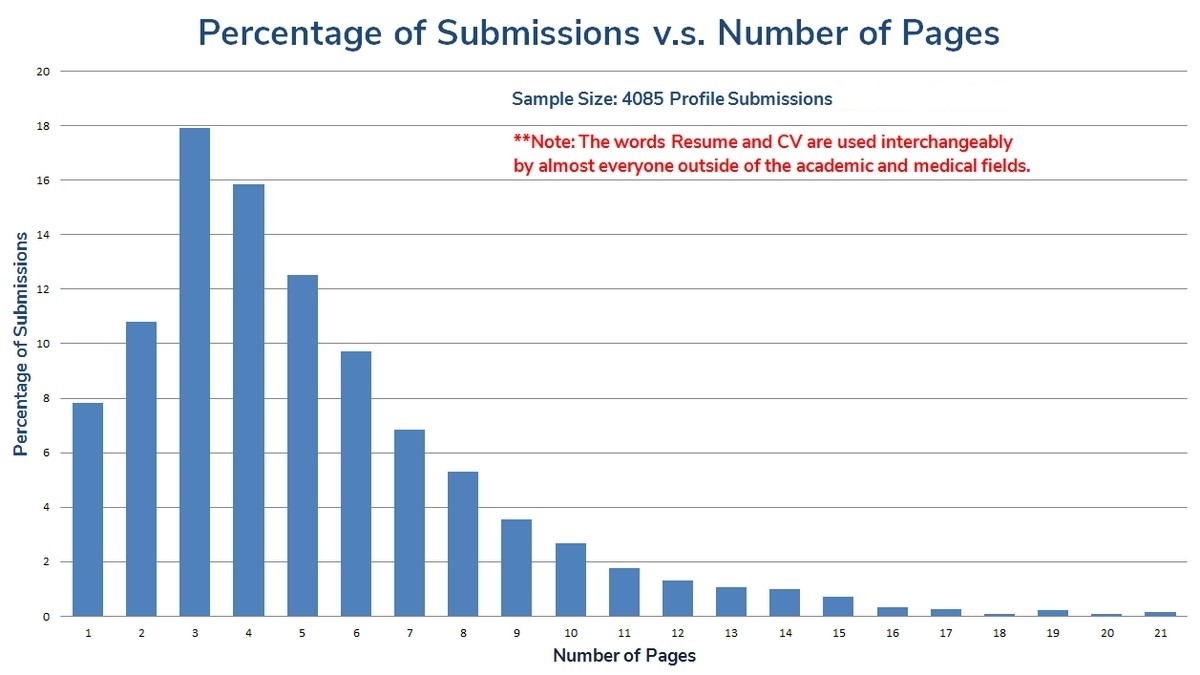
This graph shows the number of pages contained in 4,000+ resume submissions. It demonstrates that there is nothing unusual about submitting a resume longer than one or two pages.
In over 20 years of recruiting and working with senior recruiters, I have never heard of a client rejecting a resume for being three, four, or five pages long. However, there is tremendous media and peer-pressure pushing candidates to shorten resumes to two pages.
Yet, almost every day, candidates are rejected, or overlooked, because they failed to mention a technology or neglected to document some aspect of their experience. When asked about the omission, they almost always say their resume would be "too long."
“Missing Information Is Indistinguishable From Lack of Experience.”